Expand access to talent
Tap into a wider pool of capable individuals and create opportunities for more people to contribute.
NEW!
Access guided learning, practical tools, templates and good practice examples to strengthen organisational capability and advance your disability inclusion journey.
Disability-inclusive employment helps organisations make better use of available talent while creating workplaces where people can contribute, grow and thrive.
As Singapore's workforce continues to evolve, more persons with disabilities are entering or seeking employment. Building an inclusive workplace helps organisations access a wider talent pool while preparing for future workforce needs.
3.4%
aged 18 to 49

13.3%
aged 50 and above
Persons with disabilities are a valuable and often underutilised talent pool. With the right job match and workplace support, they can contribute successfully across many roles and industries.
Disability-inclusive employment does not need to be complicated. Many organisations can start by making small improvements to existing workplace practices, helping them access more talent, strengthen workforce resilience and create a more inclusive workplace.
Many employers are unsure where to begin, or assume disability inclusion requires significant investment or specialist expertise. In reality, practical changes often build on existing workplace practices and may be simpler than expected.
Disability-inclusive employment can help organisations attract, support and develop talent across the employment lifecycle.
Tap into a wider pool of capable individuals and create opportunities for more people to contribute.

Support employees through life circumstances, including those who acquire disabilities during their careers.
Encourage better job design, inclusive recruitment and accessible ways of working.

Create an environment where employees feel supported, valued and able to perform at their best.
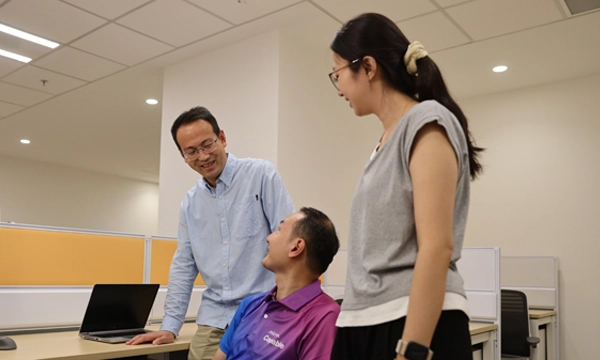
Build a workforce that better reflects the diversity of the people and communities you serve.
Support fair employment practices and organisational credibility, aligned with the Workplace Fairness Act.
Research Insight
Organisations with stronger disability-inclusive employment practices often demonstrate stronger leadership, digital readiness and organisational learning.
Every organisation's journey is different. Start with the area most relevant to your priorities, current practices and level of maturity.
Toolkit 1
Build organisational foundations through leadership commitment, inclusive workplace practices, capability-building and continuous improvement.
Toolkit 2
Attract, assess and recruit persons with disabilities through fair and inclusive recruitment practices.
Toolkit 3
Create accessible workplaces and develop practical approaches for workplace accommodations.
Toolkit 4
Support employees with disabilities through onboarding, performance, career development and workplace transitions.
Disabilities may be visible or non-visible, present from birth or acquired later in life. Every individual has different strengths, experiences, preferences and workplace support needs.
May affect mobility, movement, coordination, dexterity or other bodily functions.
May affect learning, reasoning, problem-solving and the ability to manage everyday activities.
May affect sight or hearing, including people who are blind, have low vision, are deaf or hard of hearing.
May affect communication, interaction, sensory processing and responses to changes or unfamiliar situations.
Key Principle
Rather than making assumptions based on a person's disability, focus on the individual's strengths, abilities and the support they may need to perform their role successfully.
Build the business case, set direction and champion disability-inclusive employment.
Translate organisational direction into inclusive workplace practices and people processes.
Apply inclusive practices when recruiting, managing and developing employees.
Strengthen disability inclusion initiatives and support continuous improvement.
Create an inclusive workplace through everyday behaviours and interactions.
Build the business case, define priorities, strengthen capability and review progress.
Whether your organisation is just beginning or building on existing efforts, every step towards disability-inclusive employment helps create a workplace where persons with disabilities can contribute, grow and succeed.
Get accredited now (opens in a new tab)